






Widow’s Inheritance: A Brief Look Into Inheritance Practices in Colonial New York
The loss of a partner is one of life’s most profound challenges, even the thought of it provokes deep empathy for the struggles that women may face. Yet, throughout history, widowhood has also served as a catalyst for independence, enabling women to transcend societal constraints that would otherwise limit their autonomy. Throughout the colonial period in New York, widowed women frequently seized opportunities to redefine their roles, gaining unprecedented access to economic and social freedoms.
The foundation for these freedoms lay in New York’s Dutch heritage and legal practices, which granted women, both married and widowed, greater rights than were typically available in other American colonies. Under Dutch-Roman Law, widowed women engaged in property ownership and business operations. Notably, women from Dutch ancestry received more inheritance and, interestingly, were also more likely to engage in commerce and trade. Even after the shift from Dutch to English occupation in New Netherlands, the influence of Dutch inheritance tradition remained popular. Between 1660 and 1710, testamentary practices in the province predominantly adhered to Dutch traditions, which recognized a widow’s right to the family estate. Inheritance for children was deferred until the mother’s death, a stark contrast to the traditionally English practice of primogeniture, which typically bequeathed property to the eldest son. This Dutch tradition ensured that widowed women retained control over family assets, providing them with a measure of financial security and autonomy.
One family that had a continuous legacy of matriarchal widows in New York was the Van Cortlandt family. This wealthy New York family had deep Dutch ancestry that reflected in their inheritance practices. The first and most notable example of this legacy in the Van Cortlandt family was Gertrude Schuyler Van Cortlandt. After her husband Stephanus Van Cortlandt passed away in 1700, she was appointed the sole executor of the large Van Cortlandt estates encompassing properties in Manhattan, the Bronx, and the Rombout Patent. She ran the estates and trade markets, as well as the international trade market, alongside raising eleven children. For thirty two years after her husband’s passing, she raised her children alongside building up the business her husband left her, an impressive feat even by today’s standards. Her legacy built up the Van Cortlandt family and allowed every one of her children, including her female descendants, the ability to build their own independent legacies as well.
Even after the English assumed control of the colony in 1664, these protections persisted, preserving a degree of economic independence for widowed women. The influence of Duke’s Law on New York’s inheritance practices remained limited until the 1720s. However, the shift toward primogeniture, which gained momentum between the 1720s and 1770s, marked a turning point. As English customs increasingly influenced inheritance practices, men began limiting their wives’ shares of the estate for the benefit of their children. This transition reflected broader cultural trends that confined women’s roles to the domestic sphere, particularly in matters of home and family care. While not universally applied, this shift led to a decline in widowed women’s property ownership during the late colonial period.
These inheritance trends were not confined to the elite of New York colonial society. An analysis of wills from artisans, laborers, mariners, merchants, professionals, and shopkeepers between 1664 and 1775 reveals a significant decrease in widowed women being appointed as executors or co-executors of their late husbands’ estates. It is important to note that such appointments did not necessarily mean a widow continued her husband’s business; rather, they provided her with the autonomy to choose how she wished to live her life as a widow. Though women’s inheritance responsibilities diminished during the English colonial period, they never disappeared entirely.
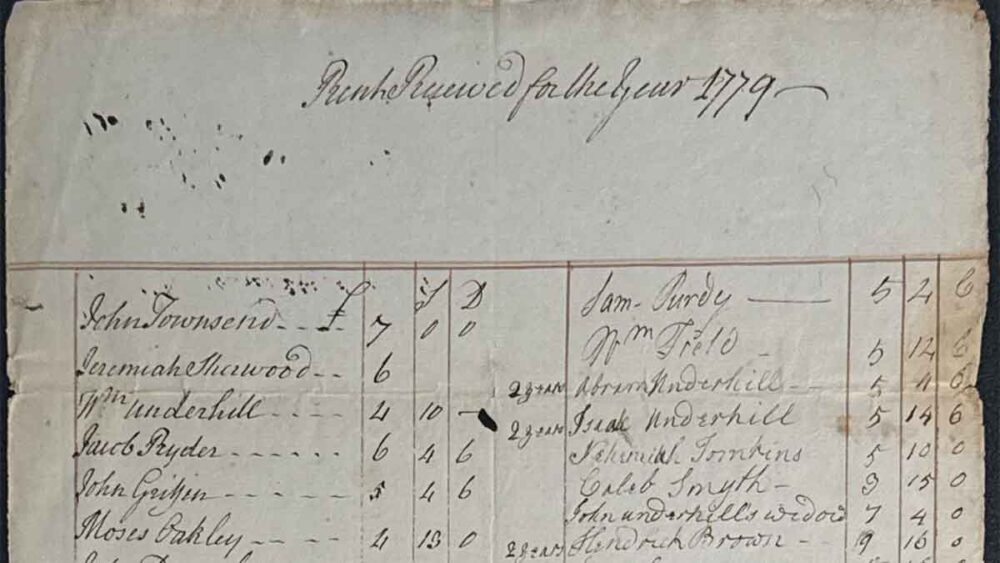
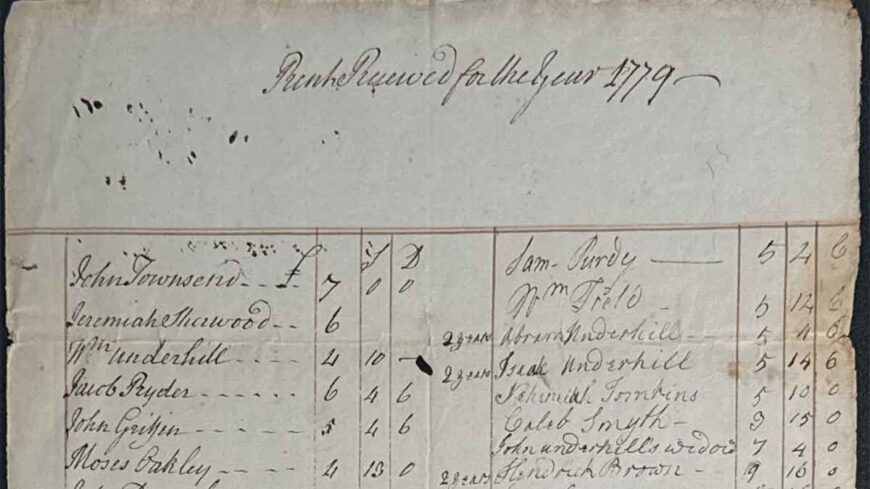
A compelling example of widowed women’s resilience, even amid shifting legal frameworks, can be found in the tenant role records from Philipsburg Manor (1754–1778). These records list widowed women paying rent to the Manor Lord for the use of farming and merchant land. Among them was Mary Van Uytendaele Liapenard Allaire, a woman who, despite limited historical documentation, left a lasting legacy. Widowed twice and mother to seven children, Mary rented and retained 190 acres of land in what is now New Rochelle. Even after the American Revolution, she continued to hold this property through the Commissioners of Forfeitures proceedings. Though her story may not be extraordinary by the standards of her time, it exemplifies how widowed women navigated legal restrictions to achieve independence and financial stability.
Widowhood is, without question, one of life’s most profound challenges. Yet, for many women across history, this very struggle became a gateway to greater independence and autonomy. By breaking through barriers that were otherwise closed to them, widowed women not only redefined their own lives but also contributed to broader societal shifts in gender roles and economic participation. Their stories remind us that even in the face of adversity, resilience and determination, alongside freedoms granted by Dutch legal practices, opened doors that are rarely discussed in the study of Colonial and women’s history.
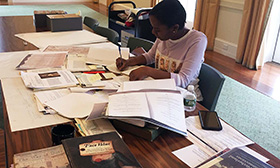
June Lambertson was the 2026 Margaretta (Happy) Rockefeller Research Fellow. She completed her BA at SUNY Purchase College, majoring in History and Arts Management. A recent research internship at the Philipse Manor Hall Historical Site, gave her experience in public history as well as a motivation to tell the stories of the historical lives of women from the Hudson Valley. Her plan is to examine Historic Hudson Valley’s manuscript collection to review and piece together the accounts and lives of widows living in 18th century Westchester County, learning the true history of these underrepresented women. She will also explore the economic, political, legal, and everyday trials and tribulations of both notable and commonplace widows as well as develop a comprehensive understanding of how these women used their widowhood to maintain individual freedoms that their married and single peers were not afforded at the time including owning property, voting, and citizenship.
Interested in learning more about our Women’s History Institute Summer Research Fellowship, including information on how to apply? Click here.